Internal CRM
Contacts, opportunities, activities, notes and next actions in a shared stream.
We transform dispersed activities between sheets, emails and tools disconnected into a simple to use system, designed on the real needs of your team.
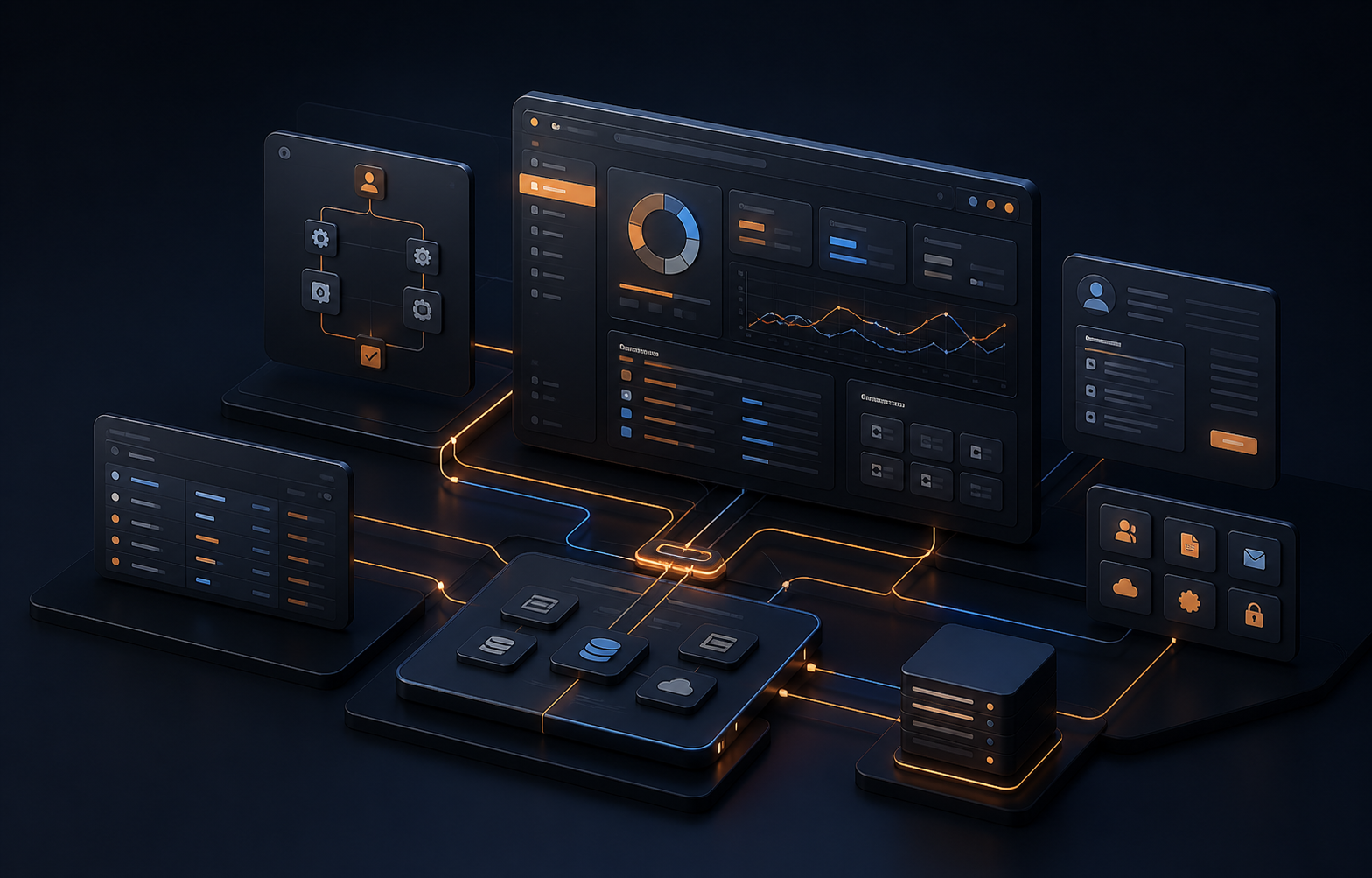
We start from how you work today, we figure out the steps that make you waste time and define a first useful version to test with people who will really use it.
Repeated steps, duplicate information and disconnected tools consume time every day. Before proposing a solution, we identify where friction really arises.
Different versions of the same file, incomplete data and manual controls.
The same information is copied between email, management, documents and reports.
Requests and approvals remain in chat or depend on a person's memory.
The team bypasses the tool because the expected flow does not coincide with real work.
To understand what is going on, we need to gather data from different sources.
There are no controls, clear responsibilities and a unique history of the activities.
These are possible scenarios, not case studies or ready packages. Functions and priorities are defined on the real process of the company.
Contacts, opportunities, activities, notes and next actions in a shared stream.
State, responsibility, deadlines, documents and progress readable by the team.
Generation, verification and archiving without passages scattered between folders and emails.
Useful indicators updated by work data, without reconstructing each hand report.
Differentiated access for employees, customers or suppliers with relevant information.
Links verified with e-commerce, accounting, calendars, emails or other services.
Each example describes a possibility. It does not indicate a product already ready or a result obtained for a specific customer.
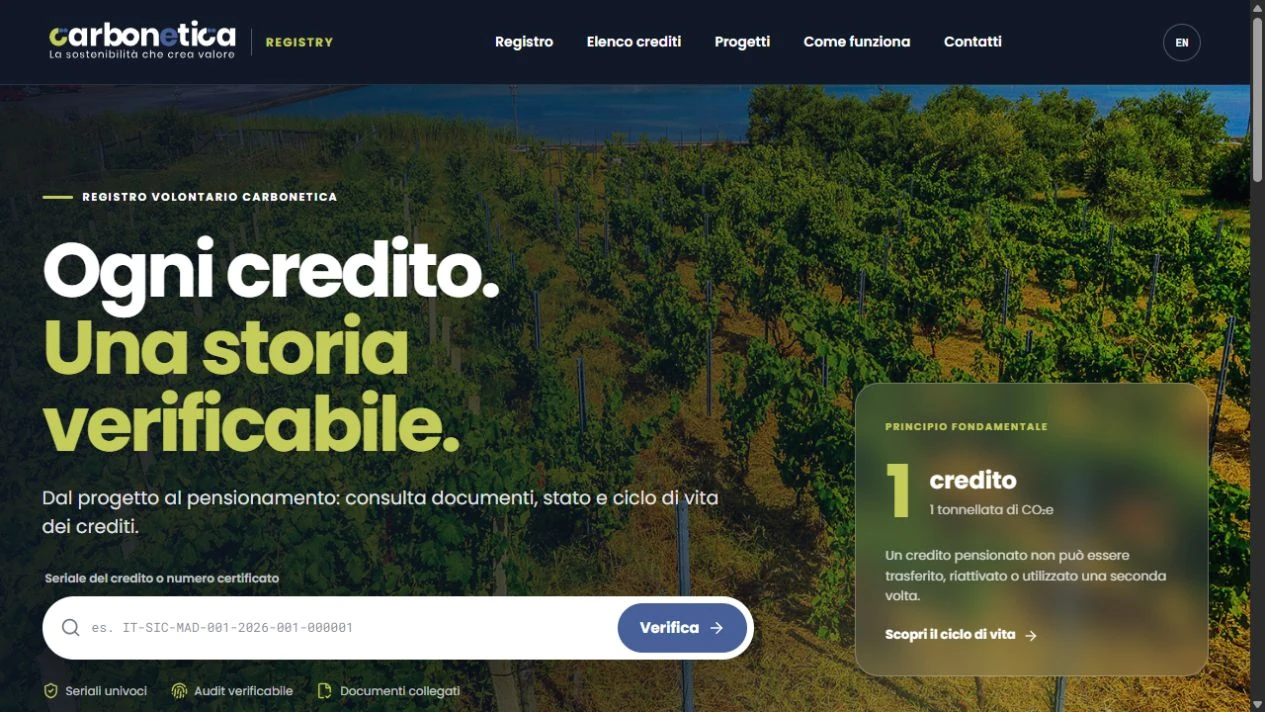
Carbonetica Registry connects a public portal, data, documents and operational rules. Explore the project and its real screenshots.
The first analysis also serves to avoid unnecessary development. We choose the simplest solution that really covers the process.
It is sensible when the process is common and the tool covers well users, functions and integrations without too many compromises.
Faster to adopt, less specific.It serves when the tools are suitable but lack automatic steps, notifications or synchronizations between one system and the other.
Discover E-ROE automationsIt makes sense when the way of working is specific, strategic and adapting to existing products continuously generates errors or extra work.
Logical, roles and interface designed from scratch.The project grows by stages. Each step must reduce uncertainty before adding complexity.
We collect roles, steps, exceptions, data and tools already present.
We separate the essential functions from those that can come later.
We make visible flows and shields before building the most expensive part.
We develop the core that solves the main problem and allows a real test.
We verify normal cases, exceptions, permits, data and ease of use.
We define access, training, assistance and upcoming measurable improvements.
Artificial intelligence can accelerate analysis, prototyping, production of repetitive parts of the code and controls. This allows you to devote more time to decisions that make the software really useful to the company.
It does not replace the understanding of the process, the design of architecture, security, testing with realistic data or the responsibility for the result.
A credible quote requires a perimeter. The cost depends not only on the number of screens, but on the work necessary to manage data, rules, exceptions and responsibilities.
Read how we value the costCompare control, adaptation, costs and dependencies before choosing.
Read the comparisonFind out which variables really affect and how to estimate the value of the recovered time.
Evaluate cost factorsFrom analysis to MVP, to migration, testing, training and maintenance.
Follow the stepsOne process to organise, with a defined scope? Explore E-ROE Operational Portal: scope, price and interactive demo.
Describe the process that today takes more time, creates errors or depends on too many tools. The first answer is to understand feasibility and priority, not to automatically sell a development.
Quick answers to understand time, mode and what E-ROE can do for your project.
There is no correct price without analyzing the process. Users, roles, data, integrations, migration, permits and operational criticalities change the perimeter. After the analysis we define a first useful version and a transparent quote.
Depends on the number of functions and integrations. First we separate what really serves on the side that can wait, then we define stages and verifiable times. We do not promise a standard delivery valid for each project.
We design from logical zero, interface and streams around the way of working the company. We do not sell a pre-set management or a modular package; reliable technical foundations are chosen according to the project.
Yes, when the tools expose reliable integrations. We verify APIs, data formats, permits and limits before including each link in the project.
Properties of the code, hosting, access, maintenance and costs of external services are indicated in the estimate and contract. Each project must make these responsibilities clear before development.
We use it to accelerate some analysis, prototyping, development and control activities. Requirements, architecture, security, tests and decisions remain under human responsibility.
No. If an existing product covers the process well, it can be more convenient to adopt it or integrate it. Custom makes sense when the process is specific, strategic and the compromises of standard tools generate continuous work or errors.