
When a professional decides to create their own site, one of the first choices concerns the structure: **a single long page or multiple separate pages? * *
The one page site looks simpler and faster. The multipage site offers more space for services, content and SEO. Neither of the two solutions is ever better: the choice depends on the number of services, the public and how people come to the site.
Quick answer:* choose a one page if you have a very clear offer, only one public and one main action. Choose a multipage site if you want to distinguish services, respond to different searches or grow the site over time.
What is a one-page site?
A one-page site collects all the main content on a single page.
The menu, when present, leads to sections of the same URL:
- presentation;
- services;
- method;
- reviews;
- frequently asked questions;
- contacts.
It is a suitable structure when the visitor must follow a short and linear path. It can work for a professional with only one service, an event, a personal project or a new activity that must validate its proposal.
The risk is to compress too much information on the same page. When services and publics increase, navigation becomes long and every subject receives little space.
What is a multipage site?
A multipage site assigns a URL and a purpose to each important area.
The structure can include:
- homepage;
- who are;
- page for each main service;
- method;
- projects or case studies;
- resources or blogs;
- contacts.
Each page can focus on a question and accompany the visitor to a specific action. The structure requires more content and design, but allows the site to grow without turning the homepage into an endless list.
Comparison between one page and multipage
| Appearance | Website one page | Multi-page website |
|---|---|---|
| Offer | A simple service or proposal | More services, public or locations |
| Navigation | Single and linear path | Distinct paths |
| SEO | A main theme | More intent and keyword |
| Content | Essential | In-depth and scalable |
| Time | Generally faster | They depend on pages and materials |
| Measurement | Data concentrated on a URL | Separate performance per page |
| Growth | Limited if not provided | Simpler |
| Management | Immediate | Requires an ordered structure |
The table does not replace the analysis. A well written one page can work better than ten generic pages. Similarly, a multipage is only useful if each page has a real role.
When the one page site is a good choice
The one page can be enough when:
- offer only one main service;
- works with a very precise audience;
- you have only one contact mode;
- do not predict articulated SEO activities;
- the contents are few but concrete;
- you must quickly publish a professional presence;
- you want to validate a new offer before expanding it.
An example can be a consultant that offers a unique path and receives contacts from word of mouth or LinkedIn. The page must explain public, problem, method, evidence and first step.
The one page should not become a shortcut to avoid clarifying the contents. A single page also requires hierarchy, texts, mobile design and technical controls.
When is the multipage site convenient
Multipage is generally more suitable when:
- offer different services;
- works with private individuals and companies;
- you want to place for specific research;
- have multiple locations or professionals;
- you must explain a complex method;
- you have case studies, publications or projects;
- predict a blog;
- you want to add content over time.
An accountant, for example, can have separate pages for new businesses, professionals and companies. A B2B consultant can separate audits, training and accompaniment. A doctor can distinguish performance with different questions and access modes.
What structure helps SEO more?
A one-page site offers Google a single URL to understand the entire activity. It can work well on a circumscribed theme, but it becomes difficult to optimize it for many researches with different purposes.
A multipage site allows to assign to each service:
- a URL;
- a title;
- a meta description;
- a H1;
- dedicated content;
- frequently asked questions;
- internal connections.
This does not mean creating a page for each keyword variant. Almost identical pages can confuse users and search engines. Separation makes sense when changing problem, public or necessary content.
To design a sustainable map you can usefree site structure generator.
Navigation and user behaviour
On the one page the visitor flows a decided path in advance. It is useful when information has a natural sequence:
- recognition of the problem;
- presentation of the service;
- explanation of the method;
- test;
- contact.
In the multipage the user chooses what to deepen. The homepage must then work as a map: it has priority and leads to the most suitable pages.
From smartphone both structures can work. A unique page too long, however, makes it difficult to find information. A multipage with confused menu creates the same problem differently.
Costs: a page costs less and less?
Not necessarily.
The URL number affects the job, but it is not the only factor. They also count:
- research and strategy;
- quality of texts;
- custom design;
- photographs;
- modules;
- reservations;
- integrations;
- multilanguage;
- SEO;
- revisions.
A very nice one page can require more work than a small multipage site based on a clear structure. You should compare what is designed and included, not only the number of pages.
To deepen prices and components you can read the guideshowcase website for professionals.
Can I start with a one page and grow?
Yes, but growth is expected.
Before publishing it is useful to decide:
- which services may have a page;
- how will change the menu;
- what content can be moved;
- which URLs should remain stable;
- if blogs or projects will be added;
- how conversions will be measured.
A good technical basis allows you to transform sections into pages without remaking everything. If instead the one page is built as a rigid block, each evolution becomes more expensive.
One page and landing page are not the same
A landing page was created for a campaign, a public and a precise action. It usually reduces navigation to keep the focus on conversion.
A one page site represents the entire activity. Even if you use only one URL, you must offer context, credibility, services and contacts.
A professional can have:
- a main multipage site;
- landing page for specific campaigns or services;
- pages dedicated to resources or appointments.
It is not necessary to choose only one structure for all situations.
Guided decision for professionals
Consultant with a unique service
It can start from a one page, if public and first step are clear.
Professional with multiple specializations
A multipage is preferable, with a page for each group of really different needs.
Study with more people
The multipage allows you to present teams, skills and services without compressing everything.
Activities that live in word
It can start in an essential way, but it must show evidence, method and contacts. If you want to be found for more services, you will need dedicated pages.
Professional investing in advertising
You can use a main site and specific landing pages. The campaign should not lead to a generic homepage when there is a precise offer.
The questions you need before choosing
- How many main services do I offer?
- Do the services respond to different problems?
- Do I work with more public?
- I want to be found on Google?
- Do I have cases, reviews or content to show?
- Do I expect to add services?
- Does the visitor have to do one thing?
- Who will update the site?
If simplicity and one goal prevail, the one page can be adjusted. If differentiation, SEO and growth prevails, the multipage is best.
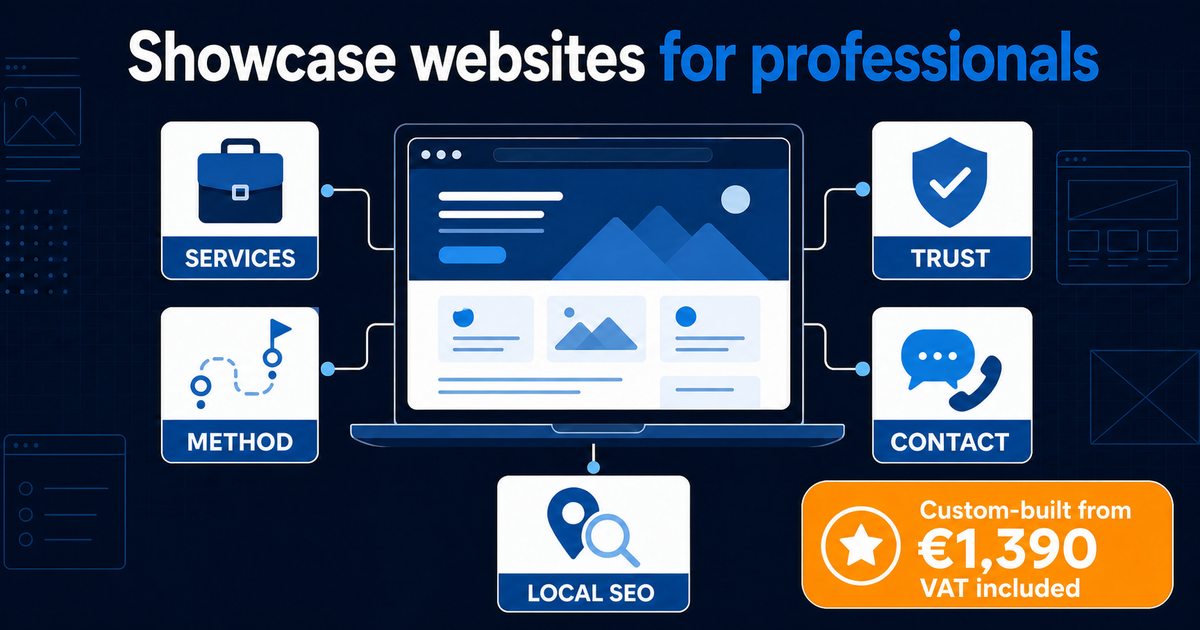
E-ROE realizescustom showcase websites for activities and professionalsstarting from the necessary structure, without imposing the same model to each project.
Frequently asked questions
Is it better a one page or multipage site?
The one page is suitable for a simple offer and only one goal. Multipage is preferable when there are more services, public, locations or SEO objectives.
Can a one page place on Google?
Yes, you can place yourself for a limited theme. However, it has less space to distinguish intent and keywords than a site with dedicated pages.
Does a multi-page site cost more and more?
Usually it requires more content, but the cost depends on the real complexity. Many repetitive pages do not automatically make the site more effective.
Can I start with a page and add more?
Yes, if technical structure, navigation and content are designed to grow. It should be defined from the beginning the possible expansions.
Is a landing page the same as a one page site?
No. A landing page is built for a campaign and a specific conversion. A one page site represents the entire activity on one page.