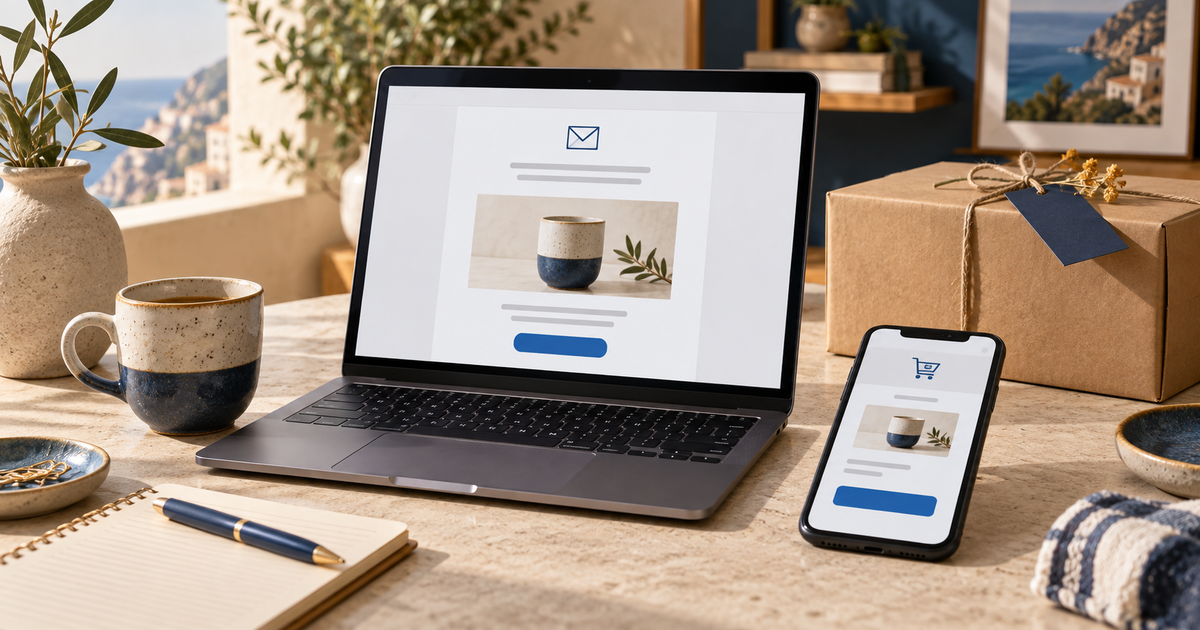
Email marketing for ecommerce serves to continue a relationship begun on the site. A new member, a person who visited a product, an abandoned cart and a regular customer do not need the same message.
The newsletter is only one part. Before increasing the frequency you have to make sure that consent, data, segments and essential automations work.
Parties from consent and data quality
Transactional delivery of confirmations and order updates is different from promotional communications. Marketing consent must be collected separately, understandable and unchecked when required.
Store:
- source of registration;
- date;
- text accepted;
- declared interests;
- registration status;
- disiscriptions;
- suppression;
- contact problems.
Do not import lists without a valid basis. A large and uninterested database makes results and reputation of sending.
Connect platform and shop correctly
The email platform must receive reliable events. Check at least:
- registration;
- product display;
- added to cart;
- checkout;
- purchase;
- refund or cancellation;
- value and currency;
- products and categories;
- Customer identification.
Run trial purchases and check that an order interrupts the abandonment reminders.
Welcome flow
The welcome sequence presents brands, expectations and first steps. It must not be just a discount code.
A possible structure includes:
- Delivery of the promise or advantage of registration.
- Products or categories to start from.
- History and verifiable differences.
- Answers to doubts.
- Social trial and assistance.
Adapt number and rate to the purchase cycle. A daily product and an expensive purchase require different times.
Abandoned trolley and checkout
Those who add a product to the cart showed interest; those who start the checkout are closer to the order. Keep the two separate events when the data allows it.
The first message recalls and facilitates the return. Subsequents can answer doubts about shipping, returns, sizes, compatibility and assistance.
Do not automatically offer a discount. First check whether abandonment depends on a site problem or missing information.
Product visit and navigation
A visit based flow can be useful when there is sufficient intention and consent. It must avoid disturbing or excessively specific messages.
Use categories, benefits and support content. Limit frequency and input not to send emails after each visit.
Post-purchase
Communication after order reduces questions and prepares the next report.
It may include:
- instructions;
- times;
- assistance;
- use and maintenance;
- request review;
- complementary products;
- repurchase at the appropriate time.
Do not start immediately with a new promotion if the customer has not yet received the product.
Reactivation and inactive customers
Define inactivity based on the real cycle. For a product purchased every month, 90 days can be significant; for a durable no.
A reactivation sequence can remember value, news and assistance. Predict the suppression of contacts that do not interact to protect deliverability and costs.
Newsletter with a goal
Each sending should have a reason: launch, deepening, product selection, content, event or promotion.
Plan a calendar that alters sales and utilities. Avoid sending the same communication to the whole list when interests and behavior allow a more relevant selection.
Before sending, check:
- public;
- exclusions;
- object and preview;
- mobile version;
- link;
- codes;
- availability;
- tracking;
- Unsubscribe.
Essential segment
Do not need dozens of segments at first. Parts from operational differences:
- registered without purchase;
- new customers;
- regular customers;
- category interests;
- value or frequency;
- country and language;
- inactive;
- people already involved in other flow.
Each segment must change message or decision. If nothing changes, it only adds maintenance.
Deliverability
Authentic domain, manage bounces and suppressions, send to interested people and maintain recognizable sender.
Checks delivery, spam, disiscrimination and openings, remembering that openings are influenced by privacy systems and are not a perfect fit.
Sudden growth of the list or a frequency change requires caution.
Measure without stopping to attribute revenues
Platforms assign revenue according to their own windows. Compare the data with total orders, margin and customer behavior.
See:
- deliveries;
- click;
- orders;
- average value;
- margin;
- new customers and regains;
- disiscriptions;
- spam;
- overlap between flow;
- trend of total turnover.
The goal is not to attribute as much sales as possible to the email, but to improve the system without damaging relationship and margins.
Order of implementation
A careful sequence is:
- Consent and authentication.
- Events and trial purchases.
- Welcome flow.
- Trolley and checkout.
- Post-purchase.
- Newsletter.
- Segmentation.
- Reactivation.
- Test and optimization.
E-ROE configuresemail marketing and automation for ecommerceconnecting them to the shop behaviour. You can start with thecontrol of existing flow.