An Italian and English business website works when visitors can find the offer, understand it and complete an enquiry in their chosen language. Translating the main paragraphs leaves navigation, buttons, form messages and later changes unresolved. Before development starts, map the corresponding pages and assign responsibility for checking facts in both versions.
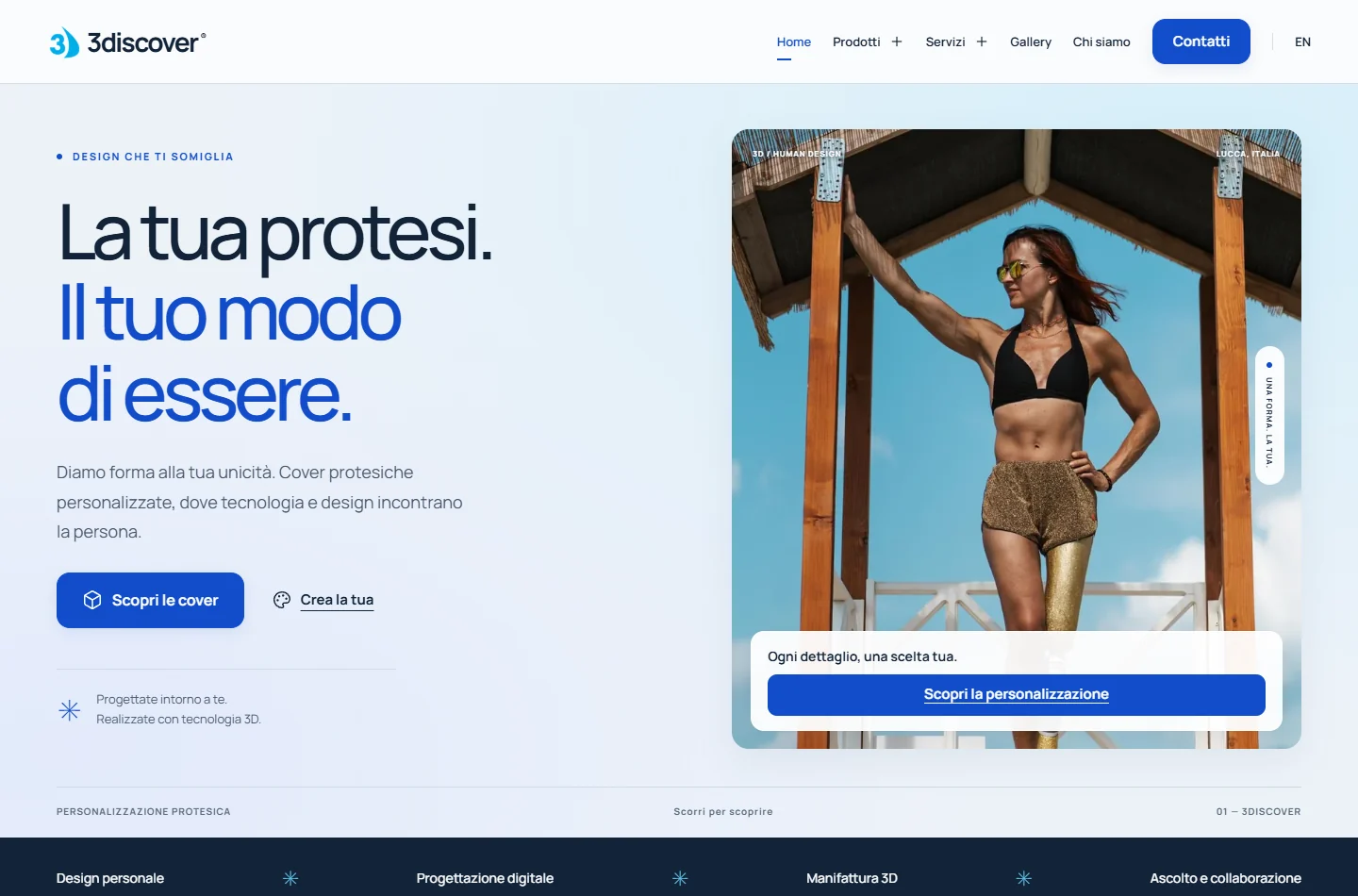
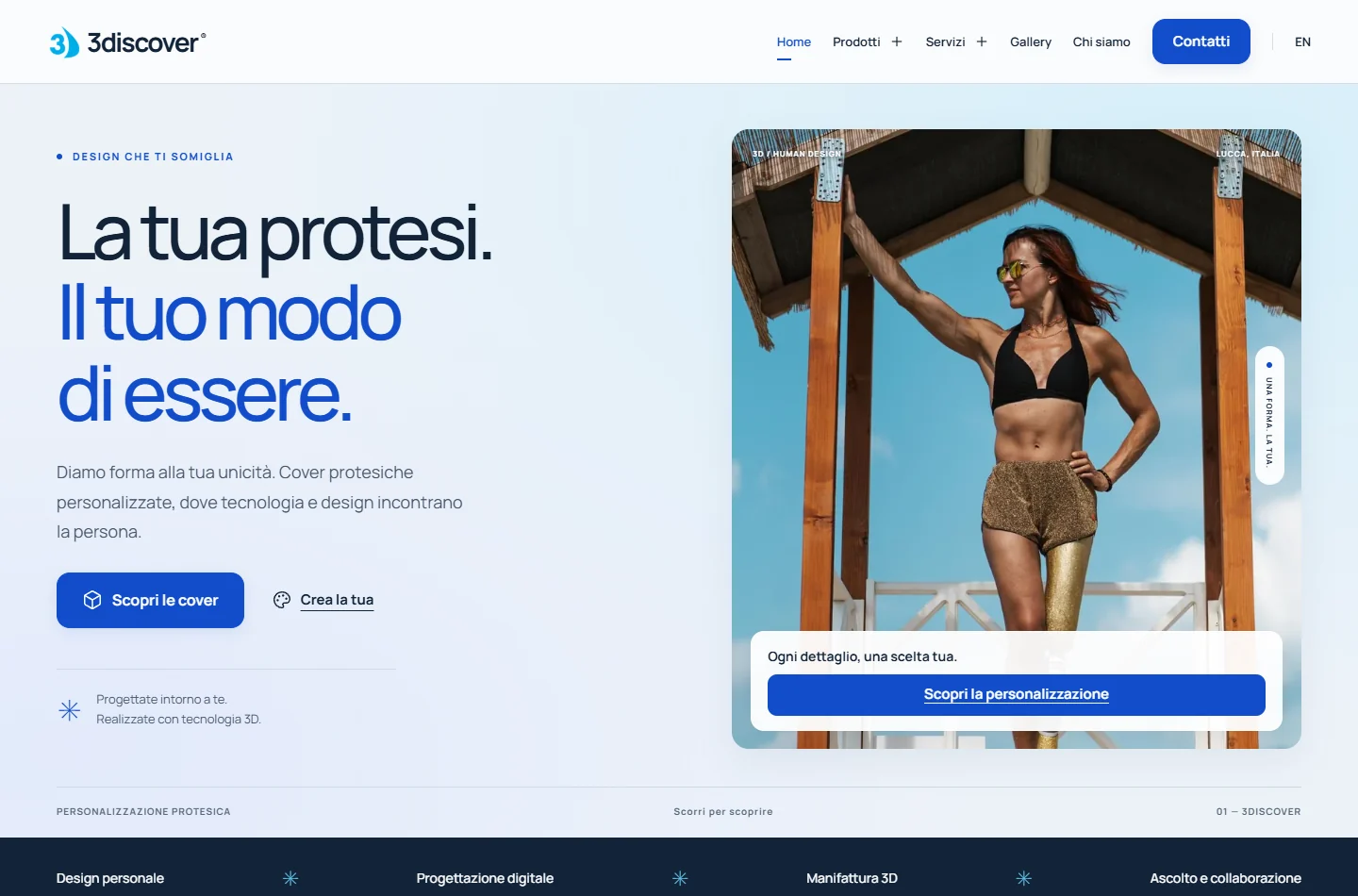
Cover: an authentic screenshot of the 3discover website from the authorised portfolio archive. It shows navigation and the EN selector, rather than evidence of traffic or commercial results.
Decide which services you can support in English
Start with the actual sales process. Who will reply to an English enquiry? Which documents can they send? Does the offer cover the same locations? Explain any differences in availability, delivery or working arrangements instead of simply replacing Italian words.
For an initial scope, choose a complete journey: introduction, relevant service, available evidence and contact. Translating the entire blog can follow later. An English service page leading to an unclear form leaves the essential journey unfinished.
Keep a register of page pairs
For each page, record its Italian URL, English URL, content owner, translation status and last check date. Distinguish approved translations from work in progress. The addresses below illustrate a possible structure; they are not E-ROE pages.
- Service:
/servizi/consulenza/and/en/services/consulting/.The offer and conditions should correspond, with any differences made explicit. - Project: connect versions of the same experience, keeping verified facts and media permissions consistent.
- Contact: include field labels, error messages, receipt confirmation and subsequent instructions.
Do not pair pages simply because they share a word. An introductory guide is not the translation of a service page. If a version does not exist, the language selector should not promise that destination.
Check URLs and language switching
A new website can use dedicated language paths. On an existing website, preserve useful URLs and plan any changes before release. An English button should open the corresponding English page where available, keeping visitors on the same subject.
Ask the developer to check the technical references too. Google requires reciprocal hreflang references with complete URLs, including each page itself. These describe language alternatives; they do not translate content or guarantee indexing or rankings.
Translate the whole journey, including less visible details
Review page titles, search descriptions, shared previews, image alternatives, navigation and buttons. English alternative text must describe the same image. Dates, units and geographic references need to make sense to the reader, without turning an English version into a promise to serve every country.
Check required fields, errors and confirmation in the contact form. If an automatic email is planned, agree its language and wording. Coordinate translations of legal information with whoever is responsible for their suitability; a language review does not certify legal compliance.
Prepare a practical check before opening both versions
- Open an Italian service page and switch to English: check the destination and meaning.
- Switch back from that page and follow its project and contact links.
- On a phone, read navigation, buttons and instructions without horizontal scrolling.
- In an agreed preview, check form errors and confirmation. Any actual submission should be authorised and clearly marked as a test.
- With the technical owner, check titles, canonical URLs, language references and that the sitemap includes only ready pages.
Recheck English whenever Italian changes
Add a “change to carry over” field to the register. When a service, condition or contact procedure changes, the person approving Italian should also trigger the English review. Avoid leaving a new offer alongside outdated instructions in the other language. Before publishing a change, check both pages and the links leading to them.
Use our guide to business website copy to collect the initial facts. For a published bilingual navigation example, explore the 3discover project. It shows real design choices, without demonstrating commercial results that another website can assume.
Planning a bilingual showcase website? Bring your service list, the people who will handle enquiries and the materials you already have. We can define a complete, verifiable Italian and English journey.